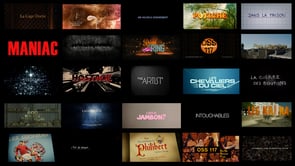
“Motion Plus Design” – the first exhibition center dedicated to Motion Design in Paris!
Posted on: February 2, 2012Comments are off for this post
“Motion Plus Design” is a non-profit project which aims to create the first exhibition center dedicated to Motion Design in Paris, France. Students, professionals and anyone interested can discover artists, meet them and learn a thing or two. This centre will also provide an opportunity to promote artists in other design departments so the different graphic design worlds could cross.
“Motion design is already present in all parts of our lives. Yet, no place is dedicated to celebrating motion design. When we realised this, we came up with the idea of founding the world’s first Centre dedicated to the world of motion design.”
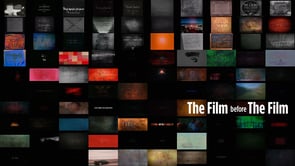
The video below has for goal promoting this interesting idea and takes a look at the growth of Motion Design throughout the century:
“Motion Plus Design” – the first exhibition center dedicated to Motion Design in Paris!
Posted by motionVFX Team
January 30, 2012, at 10:54 PM
“Motion Plus Design” is a non-profit project which aims to create the first exhibition center dedicated to Motion Design in Paris, France. Students, professionals and anyone interested can discover artists, meet them and learn a thing or two. This centre will also provide an opportunity to promote artists in other design departments so the different graphic design worlds could cross.
“Motion design is already present in all parts of our lives. Yet, no place is dedicated to celebrating motion design. When we realised this, we came up with the idea of founding the world’s first Centre dedicated to the world of motion design.”
The video below has for goal promoting this interesting idea and takes a look at the growth of Motion Design throughout the century:
Every month the centre will welcome (infomation via official website):
either an artist [Kyle Cooper for example, the current American king of title sequences]
or a production company team [Post Panic or Psyop for ex.]
or a theme [for example 'the history of motion design from the 1920s to the present day']
The Centre will also house an area exclusively dedicated to the showing of work by experimental artists, from photographers, video artists and / or interactive and / or typographical artists. The idea is to create interaction between two worlds: those who are interested in Motion Design will be surprised to discover the exhibition of the work of a photographer, and those who will come to look at the work of a typographer will discover Motion Design.
Source: http://motion-plus-design.com
King of Graphics
Posted on: February 1, 2012Comments are off for this post
Find the common element among these things: Psycho; United Airlines; Quaker Oats; Dixie Cups; Goodfellas; the Girls Scouts of America. I picked a grab bag, and I could have included a lot more, to show how diverse the work of Saul Bass was; he did graphics, and more, for all of them. There is no bigger name in graphic design than Saul Bass, and now there is a gorgeous book, huge and colorful as befits his career, Saul Bass: A Life in Film and Design (Lawrence King Publishing) by his daughter Jennifer Bass, herself a graphic designer, and Pat Kirkham, who teaches decorative arts and design history. Flip through the 400 big pages here, and you are bound to find logos, posters, and movie title sequences you have seen many times; Bass’s range and influence were astonishing. There is a bit of biography here, along with a relatively chronological summary of his work from his poster for his high school’s open house through the poster for Schindler’s List. The text is worth reading, and the authors have quoted generously from Bass’s own thoughts on his life, work, methods, and output. As befits Bass’s legacy, however, this is a picture book, and it is a treat for the eyes.
Bass was born in the East Bronx in 1920, the child of Jewish immigrants. Late in life he recalled, “Some years ago I was asked, ‘When you were a kid what did you want to be when you grew up?’ Back then I thought the answer I gave was funny. I said, ‘Saul Bass.’ It was no joke.” He was Saul Bass early; besides excelling in art in high school, he painted signs for local fruit stalls and store windows. A scout for the Art Students League saw some of the signs, found out who made them, and offered Bass a scholarship. He took fine arts courses, but knew what sort of work he wanted to do. “The layout class had a fine-art content, but Saul was happy with the approach, realizing that to be any good at commercial art he had to learn such things as form, color, perspective, and composition.” His first job was for a small commercial art studio that designed trade ads for United Artists; it was just the work he wanted, although film ads in those days had none of the associations with glamour that was to come. “I had no idea anyone looked down upon advertising,” he said. “I looked up to it.” Still, he grew tired of following formulas and “cramming as much illustration, type and hype as you possibly could into ads.” When he took the next job as an art director, he specified that he would not work on movie ads.
Bass was introduced to the Bauhaus theorist György Kepes, who became his mentor and helped change Bass’s work into the strongly Modernist mode, paring away decoration and superfluities. Bass’s firm had trouble with its account for Warner Brothers, and despite his “no movies” stance, Bass was back working on films. In 1946 he realized he had to get out to Hollywood. Movies were changing, not only reflecting the social conditions of the postwar years, but also more films were being made by independent directors and producers. Title sequences of the movies were conventional letters over conventional backgrounds, and sometimes theaters ran the initial credits over the curtain as it went up. Bass thought a film began at the first frame and deserved a mood-setting overture. His title sequences are famous for setting the tone of the film, and are among the best ever made, from the swirling Lissajous patterns of Vertigo to the funny cartoons preceding It’s a Mad, Mad, Mad, Mad World.
Bass also did the credits for Psycho, and Hitchcock knew how important integrating Bass’s work into the film was. “Hitchcock involved Saul from the earliest stage. They had meetings before writing began, and Saul received each section of the screenplay as it was completed.” The result was a series of black and white bars on the screen, shifting as if you could almost figure out why, and revealing the words of the credits only when they came infrequently into perfect alignment. It was a signal of dysfunction and uncertainty. Not only did Bass do the titles, he was paid a good fee to “do something” with the shower murder scene, one of the most famous and frightening sequences in all cinema. Bass came up with storyboards that emphasized quick cutting to show a bloody murder in a stylized, frenzied fashion. Hitchcock was reluctant: “I showed it to Hitch. It was very un-Hitchcockian in character. He never used that kind of quick cutting; he loved the long shot.” Bass was even on the set and Hitchcock let him take charge of the filming of the sequence, but Hitchcock when interviewed by François Truffaut six years later was evasive about giving Bass credit.
Bass (and his wife Elaine, who gets much credit in this book for their joint efforts) had a “fade out” from making movie titles. He had a lot of corporate work to do, and was making his own documentaries and film essays (he also directed one feature film, Phase IV). He also found that directors were newly interested in using the title sequence themselves creatively, and perhaps this was a response to his own work. Nonetheless, he came back in the 1990s, working for among others Martin Scorsese (who writes the book’s forward), for whom he did the admirable credits for Goodfellas, Cape Fear, The Age of Innocence, and Casino. Quentin Tarantino gives an interesting analysis of this sort of work, saying that Bass was the greatest of title sequence makers. “I could never do what Scorsese does – give up control of the opening of my film to someone else, not even Saul Bass – I guess I should say Saul and Elaine Bass. I need to keep control of everything and Scorsese is too great a filmmaker not to know the importance of control. It can only mean one thing: Scorsese must have absolute, ab-so-lute, confidence in them. And that is nothing less than amazing to me.”
Among the most interesting pages here are the reproductions of preparatory sketches leading to a final product. Bass would do perhaps 300 sketches for a single simple logo. Shown here are his preparatory drawings for Otto Preminger’s Advise & Consent. The sketches include a Capitol dome with a wind up key, or a faceless congressman with a key in his back, or congressmen as puppets on strings. These are all good. The one Bass and Preminger agreed upon, however, was brilliant, showing the dome of the Capitol tilted open, as if the movie is going to “rip the lid off” the way politics is done. Some of the pictures here show Bass getting ready to make a presentation of his logo work to a particular corporation – there are hundreds of alternative designs on the walls. Bass was a master of the presentation of the final design to corporate clients; he liked being “on stage,” had excellent comedic timing and wit, and connected with each client individually. The presentation was the culmination of intensive work, starting with an analysis of what the company had done, its competitors, and its communication materials, and even enlisting market research. It is significant that Bass thought that one of the most interesting parts of his work was the interviews with one executive at a time. “I get to ask powerful and often interesting people about their work and their lives. It is in their heads that the real blueprint for the future exists or is being formed.”
Bass was devoted to progressive causes, and did plenty of pro bono work; there are designs here for the ACLU, the Special Olympics, Boys Clubs, YWCA, and more. Bass had a devoted family, and people who worked for his firm remembered a dynamic, funny, intense man who loved his job. When they split off to make their own firms, he gave them his blessing – it was part of the creative process, and he had done the same thing himself. To see the many designs in this book is to appreciate that while his work was too diverse to have any one unifying esthetic, it was characterized by simplicity, distillation, and minimalism, and was always forceful because it was so concentrated. Revealingly, he was anxious with every new assignment; he told young designers that “the only difference experience made, he believed, was the knowledge that since one had managed to come up with good ideas in the past, there was good reason to believe it would happen again.” He also said that considering present work is humbling “because no matter how much experience you have, the blank page is still terrifying.” Maybe so, but he conquered any such fears countless times, with successes reproduced here on page after page of memorable, effective images.
One Fine Day Travels To The “Hart of Dixie” For The CW Network
Posted on: February 1, 2012Comments are off for this post
One Fine Day, the creative design/animation boutique led by Creative Directors Nathalie De La Gorce and Chris Haak – proved the old adage that “less is more” true with a new show open for the popular romantic comedy “Hart of Dixie” (seen Mondays on The CW Network). With great style, the open creatively distills the show’s essence into just ten eye-catching seconds.
“The piece was constructed as one continuous camera dolly and pan, with a combination of live action, still photography and CG elements all arranged in 3D,” Haak says. “We designed a 3D animated panoramic sky throughout to provide continuity and tie all of these disparate elements together.”
The open begins with street level shot of a pair of fashionable women’s shoes. The camera quickly pans straight up toward the city skyline as a bright sunburst gives way to a dolly-tracking shot past a “Welcome to Bluebell “ sign and toward an expansive country home. The open ends with a shot of the show’s star, Rachel Bilson, seated on a suitcase alongside a picture perfect lake, complete with a dock and gazebo off in the distance.
According to Haak, the opening shot of midtown New York was constructed by compositing several still photos into a panorama. All of the Bluebell elements were either rotoscoped from footage supplied by the client, or edited from still images.
Additionally, One Fine Day shot a number of HD motion elements of marsh grasses blowing in the wind to keep things from feeling too static, and to help transition between environments. For the final shot Bilson was filmed against a greenscreen in Los Angeles and composted into the scene.
“The CW Network was looking to capture the essence of this show, which tells the fish-out-of-water story of a young, New York City doctor who finds herself working in the small town Bluebell, Alabama,” Tom Bayer, One Fine Day Executive Producer, says.
For De La Gorce, the short running time meant many of these visual elements had to coexist on screen at the same time. Because of that one of the biggest challenges for the creative team was composing frames that would work well together.
“It was difficult to tell if elements would work together without seeing them composed with decent mattes and color corrections – we couldn’t just do a rough comp and to see how it looked,” De La Gorce says. “We ended up doing a lot of perspective alteration or removal, not to mention color correction, to achieve the exact look we were after.”
Trollbäck + Company Designs “The Stuff of Life” Open for TEDGlobal 2011 Conference
Posted on: July 14, 2011Comments are off for this post
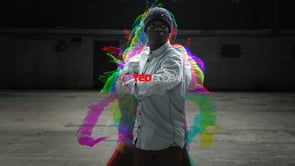
Creative studio Trollbäck + Company has partnered with TEDGlobal to create the opening titles for the conference being held this week in Edinburgh, Scotland. TEDGlobal’s 2011 theme focuses on “The Stuff of Life” where speakers and attendees of the 4-day conference analyze the resources, technologies and skills that make life possible and keep it going — and the many things that make it interesting, enjoyable and worthwhile.
Trollbäck + Company has a long history of creating opening sequences for the prestigious TED brand. For this year’s titles the team explored the relationship between nature and science:
“Science and exploration help humans understand their lives by dissecting everything they can touch and feel, ” quotes Jakob Trollbäck, the company’s founder and executive creative director. This dissection can be seen in the show open as a variety of objects – both man-made and organic – are sliced to reveal their complex beauty.
Longtime creative collaborator of TED, executive creative director Jakob Trollbäck is a member and contributor to the conference, giving his own TED talk titled “Rethinking the Music Video” in 2008.
Credits
President / Executive Creative Director: Jakob Trollbäck
CEO / Executive Creative Director: Joe Wright
Executive Producer: Mike Eastwood
Head of Production: Erica Hirshfeld
Art Director: Christina Rüegg
Senior Designer / Technical Director: Peter Alfano
Technical Director: Justin Zurrow
Designer / Animator: Sean McClintock
Trollbäck + Company Releases Video iphone App +loop
Posted on: July 12, 2011Comments are off for this post
Creative studio Trollbäck + Company can now add iphone applications to its list of design services after the launch of their first app called +loop. Developed by Trollbäck + Company digital creative director Stephen Baker, +loop allows users to split their iphone screen into a custom grid of small video players that record and play back motion or still images. Users can choose from the full screen mode to create a juxtaposed video loop or record imagery in individual squares. The grid, frame offset and playback speed can be adjusted to create a wide variety of compositions. Video loops or composed still images can be exported to your iphone photo library. Examples of +loop videos can be found on the Trollbäck + Company Vimeo page. The app is available for $1.99 on itunes.
About
Trollbäck + Company is a creative studio communicating engaging ideas in the simplest, smartest and most visionary ways. Led by executive creative directors Jakob Trollbäck and Joe Wright, the collaborative group directs television commercials, designs film titles, brands networks and creates experience-based content for global brands. Past clients include advertising agencies BBDO, Anomaly, Euro RSCG and Y&R and brands Nike, Jaguar, HBO, ESPN and Target.
In addition to receiving a primetime Emmy for the opening title design on Mira Nair’s “Hysterical Blindness,” Trollbäck + Company has been profiled by Apple.com, featured in The New York Times, Creativity, Conde Nast and American Cinematographer and was showcased at the Cooper-Hewitt National Design Museum.
Resonance: Motion Graphic and Sound Design Collaboration
Posted on: July 1, 2011Comments are off for this post
This video absolutely fascinated me (and may have raised some goosebumps at times). Not only are the motion graphics and sound top-notch, but because it’s a matching-up of collaborators, each piece is distinct and forces you to examine it both visually and audibly. Resonance is the collaborative vision of SR Partners and seeks to explore the relationship between geometry and sound. Motion Graphic designers and Audio artists were paired off and directed to create 12-20 second clips. This is the result:
RESONANCE from Resonance on Vimeo.
Via Design.org: http://design.org/blog/resonance-motion-graphic-and-sound-design-collaboration#ixzz1Qs7NIady
-yU+co illuminates ”The Green Lantern”With Stunning Stereoscopic 3D Title Sequences
Posted on: June 28, 2011Comments are off for this post
Pause Fest 2011 | Open for submissions!
Posted on: May 18, 2011Comments are off for this post
Melbourne’s already vibrant cultural and arts scene is about to receive a fresh new feel and perspective with the launch of its first digital festival. Pause Fest, which will be held from the 7th-13th November 2011, is about the new, innovative, interactive, exciting, creative and contemporary in the digital, advertising and creative industries featuring some of the world’s most creative minds of the 21st century.
This exciting addition to Melbourne’s cultural landscape has launched their impressive website which provides information about the amazing local and international artists and agencies that will be taking part in this years inaugural festival. The website features profiles, interviews and show reels from the likes of industry heavyweights such as Tronic Studio (USA), Fantasy Interactive (SWE), Director Kobayashi (UK), Leviathan (USA), Plenty (ARG), Physalia (ESP) as well as talented solo artists making waves in the industry: Dima Grubin (BLR), Andrey Muratov (RUS), Ronaldo Tozzi (BRA), Antonis Zagoraios (GRE), Dante Nou (AUS) and many others.
Pause Fest’s mission is to transform the city into an open gallery and create networking opportunities as well as dazzling visual and interactive experiences for both artists and the general public. That’s why Pause Fest has a number of opportunities for creatives to get involved and welcomes all submission whether from agencies that are looking to expand their scope and be part of something truly unique and innovative, or from solo artists who would like an opportunity to have their work showcased to an international and national audience.
Pause Fest is looking for a range of different types of talent to be involved, from local agencies and artists, production houses to musicians, performers and VJs to truly show off the plethora of creative activity that Melbourne offers. The festival will be an amalgamation of open exhibitions, interactive displays, live musical performances, visual projections, brand and product launches and new technologies.
Submission forms for show reels, animation, anything that moves and is at the cutting edge of the creative industries or blurs the creative boundaries can be found online on the Pause Fest website as well as submission for their world wide open poster contest for graphic artists. Submissions close September 1st 2011.
The type of submission Pause Fest is looking for are:
• Show reels of animations, anything that moves or is 3D
• Interactive displays and exhibitions
• Product and brand launch events to be part of the festival – anything that is new and innovative from concept cars to new technologies and communication devices
• Visual projections that truly dazzle
• Musical and live performances of any kind and any genre
• Poster graphics for the Pause Fest poster
• And anything to that is digital and kick’s ass!
Contact: submissions@pausefest.com.au
Trollbäck + Company Launches Digital Division
Posted on: March 25, 2011Comments are off for this post
New York, New York, March 24, 2011 – Creative Studio Trollbäck + Company launched its digital division early March to expand its experience design capabilities and provide integrated digital solutions and interactive media for advertising / branding campaigns and public space installations.
Making the decision to expand into digital was strategic yet organic, considering Trollbäck + Company has worked over the past ten years extensively within the commercial, network and entertainment industries. Executive Creative Director Jakob Trollbäck states, “Our work has always been about creating experiences. For us, it was natural to venture into more immersive, engaging projects that are both emotional and intellectual.”
After a successful run at his award-winning agency, Red Antenna, Digital Creative Director, Stephen Baker joins Trollbäck + Company to helm the T+Co Digital Division. With a background in both design and programming, Steve has the cross-discipline perspective to develop highly visual interactive experiences. His work with clients such as American Express, Sony, VH1 and Nokia has earned him industry and peer praise. Most recently, Baker played an instrumental role in the programming for a collaborative display in Times Square that invites pedestrians to submit answers and photos via text message. He has also developed interactive works for international museums, commercial and art exhibits in Abu Dhabi, Doha, Antwerp and London.
The T+Co Digital Division now has the capabilities to complement advertising and branding campaigns with digital solutions as well as explore opportunities in exclusive experience design projects. Baker will be collaborating directly with the design team on digital initiatives. “I?m looking forward to working with Trollbäck + Company to enhance the art of moving image and interactive design by combining the strengths of both fields. I’ve admired the quality and aesthetic of their work for years – always inspiring, memorable and bold.” Trollbäck on Baker, “Steve has a unique talent to see opportunities for immersive interactions and can quickly figure out how to make them come to life. We’ve collaborated with him over the years at Red Antenna and were impressed. We’re delighted to have him join the team.”
Trollbäck + Company is no stranger to experience design and large display installations. Previous digital projects include: content for the Gehry IAC wall, the 2012 Olympics campaign displayed in Times Square graphics and most recently a project for Metlife at the New Meadowlands Arena 54-foot monitor.
As Trollbäck + Company looks towards its future, the goal remains to tell dynamic visual stories for existing clients while also collaborating on digital experience projects. With this expansion, the studio sees the new opportunity to present narratives as an experience and immerse all senses through an environment.
About
Trollbäck + Company is a creative studio communicating engaging ideas in the simplest, smartest and most visionary ways. Led by executive creative directors Jakob Trollbäck and Joe Wright, the collaborative group makes commercials, brands networks, designs film titles and creates digital experiences. The trademark approach relies on unorthodox thinking and immersive storytelling, and that a compelling and focused message is essential for any successful communication.
Past and present clients include: Nickelodeon, A&E, HBO, TNT, AMC, RED, Jaguar, Nike and the New York Times Magazine. Trollbäck + Company has received numerous awards including the Broadcast Designers Association Awards for network branding work, a Prime Time Emmy and four Emmy Nominations for Title Design. For more information, visit www.trollback.com
TDC Celebrates the Art of Title Design in INTRO Competition
Posted on: January 13, 20111 comment so far
Some of the most exciting creative work is being done in the field of title design for film, television, online and live gatherings. With its INTRO competition, The Type Director’s Club (TDC) recognizes excellence in title design and gives international artists a forum to showcase their work. The deadline for submissions has been extended to February 9, 2011.
The 2011 competition will be judged by a panel of distinguished professionals including Randy Blasmeyer (Big Film), Timmy Fisher (MK12), Karen Fong (Imaginary Forces) and Mark Kudsi (Motion Theory). TDC Chair Jakob Trollbäck will serve as the chairman. Winners will be celebrated at the annual TDC award show in New York and the work will be posted online as well as published in TDC annual Typography 32. Entry forms are available online at www.tdc.org.
The competition features three categories:
A. Titles for feature films, shorts, and documentaries
B. Titles for TV shows
C. Online titles (e.g. for online episodic) and titles for live events (e.g. conferences)
Each category has seven sub-categories: typography, animation, visual design, music & sound design, student work, unscreened work and end credits.
The TDC INTRO competition was founded in 2009 by chairman Jakob Trollbäck. He states, “I was struck by how little attention the art of title design was given. As ubiquitous as motion graphics have become for everyday communication, there is still scant recognition of excellence in the field.” TDC hopes the competition will set a high bar for everyone who strives for excellence, and will serve as a source of inspiration for practitioners in the field of motion graphic design.
About TDC
The Type Directors Club is the leading international organization whose purpose is to support excellence in typography, both in print and on screen. With a solid historical background, the TDC today represents the best of today’s type design and type use.
Catch Me If You Can, Auto Focus, Far From Heaven and the Art of Retro Title Sequences
Posted on: March 24, 20093 comments so far (is that a lot?)
Catch Me If You Can,
Auto Focus,
Far From Heaven and
the Art of Retro Title Sequences by Deborah Allison
Source: sensesofcinema.com
Deborah Allison is based in the UK and has recently completed a PhD at the University of East Anglia: “Promises in the Dark: Opening Title Sequences in American Feature Films of the Sound Period.”
A title sequence is more than just a list of credits. It can be a mini-movie which sets up the film that it’s a part of. It can establish mood, period and style. A title sequence can take care of backstory. It can soothe the audience or get them agitated. Title sequences are an art form of their own.
– Big Film Design (1)Over the past few months we have been treated to a wave of American films that have taken as their source material the film styles and genres of times gone by. Films such as Catch Me If You Can (Steven Spielberg, 2002), Far From Heaven (Todd Haynes, 2002), Chicago (Rob Marshall, 2002), Undercover Brother (Malcolm D. Lee, 2002) and Auto Focus (Paul Schrader, 2002) have shared the agenda of lavishly recreating period features whilst positioning themselves explicitly within earlier cinematic traditions. Several of these films, including Catch Me If You Can, Auto Focus and Far From Heaven, have announced their intentions from the very beginning, signalling their relationship to their antecedents by using title sequences that combine highly evocative images and musical scores. It is these films I will discuss in this article.
Each of these movies is located at a very specific point in time and space. Each is also characterised by its generic revisionism. Far From Heaven recreates the closeted suburban affluence of Eisenhower’s America in 1957. In doing so it pays homage to classical Hollywood melodrama and in particular the films of director Douglas Sirk, whose 1955 movie All That Heaven Allows forms its explicit basis. Catch Me If You Can showcases the jet-setting new prosperity of the mid-late 1960s, at the same time revisiting the caper movie so popular at that time. Auto Focus charts a course from the clean-cut home entertainment industry of 1964 Los Angeles to the deterioration of family values and the rise of home porn in late 1960s and 1970s America, its focus on actor Bob Crane (Greg Kinnear) resurrecting the tradition of the celebrity biopic. In each film, the set and costume designs painstakingly emulate the fashions and decor of their respective eras. Nevertheless, they all derive their verisimilitude less from a bid for historical authenticity than from the cinematic heritage on which they draw.
All three films use their opening title sequence to signal from the outset the sensibility that defines them. To do so is a pervasive technique, as the above quotation from Big Film Design indicates. It has been widely used for decades, and is not in itself peculiar to revisionist movies. Examples range from the animated title sequence of Move Over Darling (Michael Gordon, 1963), which sets a sprightly tone and summarises the entire narrative through the witty orchestration of three wedding rings, to the ‘creepy’ lettering, oozing in front of a misty backdrop in Voodoo Woman (Edward L. Cahn, 1956), or the scratchy hand-lettering of Berlin Horse (Malcolm Le Grice, 1970). There, as David James has argued of many other avant-garde films, “authorship is inscribed not in the narrative or the imagery so much as in the self-consciously domestic manufacture.” (2)
Catch Me If You Can has been compared to “the light, sophisticated Cary Grant comedies of the 1950s and 1960s.” (3) The tale of teenage con artist Frank Abagnale Jr (Leonardo DiCaprio), ever metamorphosing his identity in the course of his relentless pursuit by an FBI agent Carl Hanratty (Tom Hanks), it opens with a title sequence that combines the chase motif with an aura of playfulness and excitement. Designed by Olivier Kuntzel and Florence Deygas for Nexus Productions, the sequence is a brightly coloured animation of geometrically stylised figures chasing one another through geometrically stylised scenery.
The sequence moves through a series of locations, from airport, to road, then poolside bar, a hospital, a library and a wedding party, the colour scheme changing with each new setting. Little yellow arrows point to the silhouetted figures representing Frank and Hanratty, so that their progress can be tracked as the Frank figure subtly shifts identity from aeroplane pilot to doctor and so forth. The figure of Hanratty gets ever closer as the sequence unfolds, until they finally share a frame during the producer credit. A fade out leaves the end of the tale open, upholding the suspense of the main film. Other whimsical pleasures are interspersed throughout the sequence, such as the jokey conjunction of technical credits with iconic items. For instance, the real Frank W. Abagnale, author of the book from which the film derives, is credited during the library sequence, and musician John Williams’ credit is placed next to the image of a grand piano.
These titles have been widely noted by reviewers, who have likened them to Depatie-Freleng’s celebrated animations for the Pink Panther films as well as more general design trends of 1960s titling such as the work of Saul Bass. (4) Comparisons might also be drawn with the Disney family comedy, Emil and the Detectives (Peter Tewksbury, 1964), with its three angular ‘Skrinks,’ faceless, black hatted and suited in front of a navy background. The technique of annexing technical credits to appropriate images has been used in a horde of earlier films. Fittingly, this ruse was especially prevalent during the 1950s and 1960s, where it can be found in such movies as Houseboat (Melville Shavelson, 1958), To Kill a Mockingbird (Robert Mulligan, 1962) and Do Not Disturb (Ralph Levy, 1965).
![]() |
| The Pink Panther |
Sight and Sound magazine went so far as to describe the title sequence of Catch Me If You Can‘s as one of the film’s two most striking features. (5) Such acclaim in itself recalls that which greeted The Pink Panther credits. Whilst Bosley Crowther’s New York Times review of that earlier film was not altogether complimentary, he added,
There is one thing about this picture that is clever and joyous at least. That is a cartooned pink panther that runs through the main titles at the start, making mischief with the lettering, insistently getting in the way. He is so blithe and bumptious, so sweet and entirely lovable that he’s awfully hard to follow. It’s questionable whether the picture does. (6) Indeed, such was the panther’s success that he starred in his own long-running cartoon series on television, spawning an ever-popular merchandising franchise. There is certainly no accident in the fact that Catch Me If You Can‘s title sequence, like the rest of the film, makes unmistakable its relation to its forebears. Co-designer Olivier Kuntzel comes from a family with a strong design background and is brother to the French film academic and videomaker, Thierry Kuntzel, who authored a detailed and insightful analysis of the opening title sequence of The Most Dangerous Game (Ernest B. Schoedsack & Irving Pichel, 1932). (7)
The wide critical acclaim that has greeted the titles of Catch Me If You Can is founded on several factors. Firstly, their style combines a startling modernity with a retro cool that powerfully recalls the light comedies of the 1960s. Its resemblance to The Pink Panther titles, achieved through the combination of visual imagery and a Henry Mancini-like score, offers a well-known point of reference that invokes the sprightly crime films so characteristic of that era. Secondly, it sets the tone perfectly for the tale that follows: a tale where pleasures arise no more from the story itself than from the telling of it. “Like Frank himself, Catch Me If You Can is restless and playful, forever trying out new styles,” argues Geoffrey McNab. (8) The title sequence is just the first of these. Last but not least, to watch the title sequence is a pleasurable experience in its own right. It may indeed prepare the audience for the main narrative but at the same time it provides an almost entirely separate work that contributes, like trailers and advertisements, to the diversity of the programme.
Auto Focus is a very different kind of film from Catch Me If You Can. It charts the personal and career trajectory of Hogan’s Heroes star Bob Crane from wholesome family entertainment icon and devoted husband to a compulsive philanderer whose autoerotic obsession with home-porn spirals out of control and in doing so destroys his career, family life and personal relationships. The film, especially in its early parts, faithfully emulates the aesthetics of ’60s film and television family entertainment, only later deviating from this style in order to represent the decay of that milieu’s associated values. The title sequence, designed by Ken Ferris, acts as a point of connection between these parts: light in style and mood, but using motifs that anticipate Crane’s personal free-fall. The causes and means of his degeneration are thus present as latent images from the very beginning.
The title sequence’s visuals mark both the period in which the film was set and the ironic distance the film upholds between that era and its point of production. In doing so, they evince an almost clinical detachment from the subject of the film. “For all its dedication to showing Bob’s excesses and misapprehensions,” argues Cynthia Fuchs,
the film opens with credits, under Angelo Badalamenti’s slick-jazzy score, that posit a peculiar distance from its subject. Martini glasses, bikinis and cigarette holders, Hugh Hefner and Polaroid cameras: the images designate an era, a place, a sense of insularity, ease, and privilege. And so: L.A, mythic land of pretty surfaces and preening affects. (9) By establishing this cultural context from the start, the film is able to pithily convey its take on the main characters. It is their “absolute inability to see themselves,” argues Fuchs, that “most clearly indicts Bob and John (Willem Dafoe). Not as perverts per se, but as products of a culture premised on consumption and illusion, endless need and promise.” (10) Nothing could signal this meaning more effectively than the title sequence that launches the film.
Like Catch Me If You Can, this sequence also exhibits debts to titling styles of the era depicted. It simply screams early 1960s, using a carefully choreographed array of silhouetted designs that move fluidly across the screen, overlapping with one another so as to provide a formal pleasure of semi-abstract animation, redolent of the animated jigsaw pieces that open The Misfits (John Huston, 1961). In the choice of shapes used, it further recalls Rock All Night (Roger Corman, 1957), whilst the sectioning of the screen into areas of pastel colour echoes Portrait in Black (Michael Gordon, 1960). As in Catch Me If You Can, and many title sequences of the late 1950s and 1960s (the first decade of widescreen cinema) the frame is emphatically a two-dimensional space, to be geometrically divided up and sectioned off, a flat canvas that attempts no illusion of scenic depth.
![]() |
| Atomic Cocktails |
None of the title sequences of that period used a montage of contemporary artefacts in such a schematic way as Auto Focus, however. The first film to do so was probably designer Don Record’s arresting collage of pop art and psychedelia in How Sweet It Is (Jerry Paris, 1968). The titling of Auto Focus certainly finds its stylistic inspiration in contemporary artefacts but the way they are used is a product of the post-modern era, bearing closer relation to such recent montages as those adorning the 1998 book, Atomic Cocktails. This beautifully produced recipe book illustrates in every detail its argument that “the cocktail came to represent the unique American talent for combining disparate components into a final suitable product for mass consumption.” (11) The sequence can itself be seen as a cocktail in which commingled elements convincingly delineate both the milieu of the film and the complex interchange of agents that help determine the path of Crane’s life. Just as the masterful plot summary achieved in the opening titles for Catch Me If You Can are most fully appreciated after viewing the whole film, so the credits for Auto Focus have an added resonance on a second viewing when the implications of the montage elements are fully recognised.
Designed by Bureau, who had previously worked with director Todd Haynes to design the titles for his earlier films, Safe (1995) and Velvet Goldmine (1998), the titles for Far From Heaven are at the opposite end of the aesthetic pole from those of Catch Me If You Can and Auto Focus. The reason for this derives from the different era of filmmaking from which it draws its inspiration. However, in the way that the sequence relates to the main film it fulfils some very similar functions. Far From Heaven is an emotionally overblown melodrama with striking debts to Douglas Sirk. A well as adopting the main structure of his film, All That Heaven Allows, it emulates its mise-en-scène, mimicking its stylised mode of speech and movement as well as cinematography.
The title sequence refers to All That Heaven Allows as explicitly as does the rest of the film. Brief by modern standards, the sequence groups several credits onto the screen at once, in the ubiquitous style of 1940s and 1950s cinema. The elegant copperplate lettering signals both a historical period and a genteel and restrained style of address. Behind the titles we are introduced to the mise-en-scène of richly coloured autumn leaves that forms the film’s dominant visual motif. All That Heaven Allows had also used a crane shot to combine images of affluent small-town suburbia with the carmine leaves fluttering at the top of a tree and this repetition possesses a heady resonance. The title sequence simultaneously confirms the film’s frame of reference for the cinephilic viewers who will recognise its source material, whilst the rich colours and Elmer Bernstein’s lavish orchestral score create a heightened emotional environment that signal to all the sensibility of this singular viewing experience.
![]() |
| Far From Heaven poster |
Each of the films discussed here has drawn on earlier titling styles to signal both an era and a filmmaking sensibility. In so doing, they have forged a contract with the audience at the outset, instructing them of the parameters within which the film operates, alerting them to the tonalities of the film to come, and encouraging them to approach that experience in a frame of mind where they will be receptive to the pleasures it has to offer. In each case, this continued a project that began before the viewer set foot in the auditorium, as the title sequences shared common features with a range of publicity materials.
![]() |
| Auto Focus poster |
The classic lettering style of Far From Heaven was used across its print and Internet publicity. The same is true of the brightly coloured period design of Auto Focus, its poster dominated by a bikini-clad girl silhouetted in blue. A variation on the title animations dominate the website of Catch Me If You Can, and its chase motif appears in subtly varying ways on a range of promotional posters and print advertisements. These posters use pictures of the stars, Hanks and DiCaprio, instead of anonymous silhouettes, although one image simulates motion blur to such an extent that the figures are identifiable only by the names printed above them. The promotional campaign, like the title sequence, combines an impression of perpetual motion with endlessly metamorphosing identity. The title sequences for each of these films may indeed be distinctive, but they are intrinsically part of the whole package, linking the viewing experience with the expectations generated by the studio publicity.
These films are by no means the first to use retro titling styles in order to signal their relation to earlier works. Nor is it the first time that a wave of films using this technique have been released at a specific point in time. The most distinctive cycle undoubtedly occurred in the late 60s and early 70s when a significant number of title sequences examined and adapted their design heritage, persistently flaunting technique and often foregrounding the act of addressing the audience. The popularity of these devices bore testimony to an increasing self-awareness in the field, a tendency more extensively characteristic of American films of the era. Perhaps the best known of these sequences is Saul Bass’s opening for That’s Entertainment Part II (Gene Kelly, 1976) but other striking examples can be found in such films as They Shoot Horses, Don’t They? (Sydney Pollack, 1969), What’s Up Doc? (Peter Bogdanovich, 1972) and The Sting (George Roy Hill, 1973). Whether films such as Catch Me If You Can and Auto Focus herald a new cycle of revisionist credit sequences remains to be seen, but there is no doubt that they represent inspiring additions to the varied and exciting developments that have occurred in film titling of recent years.
© Deborah Allison, April 2003
I would like to express my thanks to Charlotte Bavasso and Juliette Stern at Nexus Productions for their assistance in preparing this article.
Stills from Catch Me If You Can created by Kuntzel+Deygas at Nexus Productions (for DreamWorks).
Endnotes:
- Big Film Design website, http://www.bigfilmdesign.com. Accessed 24th March 2003.

- David E. James, Allegories of Cinema: American Film in the Sixties (Princeton: Princeton University Press, 1989), p. 144.

- “Out of the pastiche,” editorial in Sight & Sound, vol. 13, issue 3, March 2003, p. 3.

- “Out of the pastiche,” 2003; Peter Bradshaw, “Catch Me If You Can,” The Guardian Review, 31 January 2003; Philip French, “Catch Me If You Can,” The Observer, 2 February 2003; Geoffrey McNab, “Catch Me If You Can,” Sight & Sound, February 2003, p. 40; Mick LaSalle, “Catch Me If You Can,” San Francisco Chronicle, 25 December 2002.

- Bradshaw, 2003, p. 3.

- Bosley Crowther, “The Pink Panther,” New York Times, 24 April 1964.

- Thierry Kuntzel, “The film-work, 2,” Camera Obscura, Spring 1980, pp. 6-69.

- Geoffrey McNab, “Catch Me If You Can,” Sight & Sound, February 2003, p. 40.

- Cynthia Fuchs, “Auto Focus,” http://www.nitrateonline.com/2002/rautofocus.html, 22 November 2002. Accessed March 2003.

- Fuchs, 2002.

- Karen Brooks, Gideon Bosker and Reed Darmon, Atomic Cocktails: Mixed Drinks for Modern Times (San Francisco: Chronicle Books, 1998), p. 9.

Credit Where Credits Are Due
Posted on: March 6, 20091 comment so far
By EMILY OBERMAN AND BONNIE SIEGLER
Published: February 21, 2009 New York Times
There’s an Oscar for pretty much every aspect of filmmaking, except one: the title sequences. Titles, though, have always played a significant part in motion pictures. They may have started out as simple black-and-white cards. But in the days before sound, they already did more than identify key players: they communicated dialogue and advanced plot. And as filmmaking evolved, so did title design. Titles have become wonderful bridges from reality into the cinematic world and back out again. At their very best, they are themselves innovative, emotional experiences, microcosms of their movies. Here are some highlights from the history of title sequences:
“The Palm Beach Story,” designer unknown, 1942. This hilarious sequence, full of freeze-frames and set to a mash-up of “Here Comes the Bride” and “The William Tell Overture,” shows the romantic leads beset by strange disasters on their way to the altar. It’s remarkable because it contains all the clues to unlock the screwball comedy’s twist ending.
“Psycho,” Saul Bass, 1960. The graphic slicing through the credits is an abstract representation of the horrors to come. Bernard Herrmann’s score mimics and enhances this violent effect. Like the movie, the title sequence is frightening in its minimalism.
“To Kill a Mockingbird,” Stephen Frankfurt, 1962. The slow pan over the jumbled contents of the cigar box — a man’s pocket watch, crayons, some marbles — lets you inside the minds of the film’s child characters. The modern typography offers a perfect contrast.
“The Pink Panther,” Friz Freleng and David DePatie, 1963. As a stand-alone cartoon starring the Pink Panther, the character created for this sequence, these titles are a perfect tip-off to the silliness that follows. Of course, Henry Mancini also provides one of cinema’s most memorable scores.
“Dr. Strangelove,” Pablo Ferro, 1964. The title sequence that inspired a thousand hand-drawn title sequences. With an orchestral version of “Try a Little Tenderness” playing, this footage of one jet refueling another in mid-air is delicately, beautifully sexual and creepy.
“Seven,” Kyle Cooper, 1995. These titles offer our first glimpse of the movie’s mysterious serial killer — his writings and possessions, his terrifying preparations. The type seems scratched on the celluloid by the killer himself. This sequence is almost as scary as the movie.
IT’S hard to imagine why these and the other exceptional title sequences have never been recognized by the Oscars. We would like to urge the academy to create this much-needed category. In the meantime, we’ve gone ahead and selected the title sequences that should have been nominated for 2008. During the nomination process, we happened upon an interesting trend: filmmakers, more and more, are plunging viewers right into the action and then ending with elaborate title sequences, which serve as epilogues or bonus tracks. Without further ado — or a badly scripted joke — our nominees for Best Achievement in Film Title Design:
1. “WALL-E,” Susan Bradley and Jim Capobianco/Pixar. These poignant end titles, which show humans and robots flourishing on a revived Earth, offer a quick history of art, from cave paintings to van Gogh. They then proceed to retell the entire movie, this time in the pixelated style of old video games.
2. “Tropic Thunder,” Kyle Cooper/Prologue. These titles feature Tom Cruise’s best performance in years as he dances to “Get Back” by Ludacris. They’re intercut with graphic freeze-frames of the rest of the cast.
3. “Slumdog Millionaire,” Matt Curtis. Another dance sequence, this one in grand Bollywood style. After a film full of difficult and sad struggles, this joyous, cathartic sequence, set to “Jai Ho” by A. R. Rahman, gives us hope that the main characters will actually live happily ever after.
4. “Iron Man,” Danny Yount/Prologue. Amazing in a comic-book way, these take us inside the blueprints for Tony Stark’s armor. The soundtrack, appropriately, unavoidably, is “Iron Man” by Black Sabbath.
5. “Mamma Mia!,” Matt Curtis. The end titles toss off the pretense of winding a story around the songs and give us a straight-up, super-’70s tribute, complete with glitzy rainbow prism effects and Meryl Streep singing her heart out.
Emily Oberman and Bonnie Siegler are the co-founders of Number Seventeen NYC, a design firm.
jonberrydesign Delivers Graphics for New TLC Series “My First Home”
Posted on: December 11, 2008Comments are off for this post
Los Angeles broadcast design studiojonberrydesigndesigned and produced the main title and graphics package for the new Authentic Entertainment series My First Home on TLC. My First Home follows first-time homebuyers through the process of hunting and buying their first home.
“I wanted a look that was both intriguing and yet self-explanatory and I think Jon had a great idea of conveying the show concept in a catchy and classy way,” said Jeanne Begley, the show’s Co-Executive Producer.
“This solution took longer than usual in the concept stages,” said Designer/Creative Director Jon Berry. “I kept bringing very bright, clean, bold designs and they weren’t hitting the mark for what they wanted.” Finally, in a brainstorm discussion, Begley showed Berry an image of a pen scribble that inexplicably attracted her, and Executive Producer Tom Rogan mentioned wanting “gritty without being gritty.” Those two comments set off a light bulb that led Berry to the concept of a diary.
The completed package includes the main title sequence, in-bumps, out-bumps, various lower third and information panel formats, transitions, and individual maps for all episodes. All design and animation was completed by jonberrydesign using Adobe Illustrator, Photoshop, and After Effects entirely on Apple Macintosh platforms.
My First Home airs on TLC Saturday nights with back-to-back episodes at 10pm and 10:30 ET/PT.
http://www.uemedia.net/CPC/designinmotion/articles/article_16146.shtml
Motion Graphics Fest 2008: Jan 15-21 in Chicago
Posted on: December 11, 2008Comments are off for this post
Motion Graphics Fest 2008, held Jan. 15-21 in Chicago, features two world-premier theater screenings, multiple post-production studio tours, audio/visual art exhibits, a/v performances, six days of motion design, sound design, and motion programming classes.
This event celebrates the best minds and brightest ideas of the emerging media landscape. Whether your a hard-core geek, a dedicated composer, a designer, film-maker, artist, engineer, programmer, educator, aficionado, prosumer, hobbyist, or just someone who like being close to the creative community, mgFest is for you. The festival has become a destination for creative professionals from all over the Midwest and the nation by attracting the meshwork of companies and individuals that surround creative motion-picture design.
Socialize at one or all of the night events while experiencing multimedia art, video and sound in synch. Watch some of the past years most creative shorts or travel thru alternate dimensions in video art. Come mingle with local art directors and advertising executives, or discuss the technical operations of a professional edit bay and graphics shop with seasoned veterans of the industry. Listen to panels on the newest advancements in delivery technology affecting every media professional. Attend cutting edge classes of your choice within the realms of motion design, sound design and programming. Awaken your creativity at the Imagination College.
Check out MGFest.com for the most current information about the 2008 event.
Unsettling Title Design for The Number 23 By Bryant Frazer
Posted on: December 11, 2008Comments are off for this post
Michelle Dougherty on Imaginary Forces’ Agitated, Blood-Red Vision
By Bryant Frazer
The opening titles for director Joel Schumacher’s new film, a paranoid-numerologythriller called The Number 23, required an approach that mixed elements from the film’s narrative (all about a man’s obsession with recurring instances of the number 23 in human history) with visual continuity with the movie itself (red blood on the screen references the deep red color of a book that figures prominently in the story). Michelle Dougherty, an accomplished designer who worked for years with the legendary Kyle Cooper (the man who forever put his stamp on the spelling of the title Se7en) and teaches a class on film-title design at the Art Center College of Design, art-directed the spot for Imaginary Forces. Watch the scene, below, then read the interview with Dougherty where she talks about coordinating the project, working with Joel Schumacher, and her favorite titles by other people.
How much input did you have in defining the concept?
Actually, Joel Schumacher was very open to us coming to the table with anything we thought would be appropriate for the film. He wanted to make the viewer understand this phenomenon. The designer, Juan Monasterio, was really considering the story, so he wanted that reveal of the cover of the red book. You probably don’t realize it as you see the main title, but as you watch the movie, the main title is actually linked to the red cover of the book.
Did that original design include the typography, and the idea of changing typography?
The changing typography was something we came up with later, when I was working with Danielle White, the editor. We had to find a way to make this feel alive — we didn’t want it to feel digital. So we had to find very simple ways of communicating the story. And we thought of using the vernacular of a typewriter and the movement of a typewriter.
Were multiple concepts presented originally?
I think we came up with five different boards.
Were they radically different from each other?
Yeah, they were. For one, we took scenes from the movie and did a very graphic style, kind of winking our eye a little bit to a Paul Rand style, or Saul Bass. We took silhouettes and re-told the story in a different way. We foreshadowed some pieces of the story. And we had ideas playing with numbers. They were all pretty different.
You said these filmmakers were very open to ideas from your team. Would that be unusual or do you typically have room to brainstorm and be creative?
There’s definitely a collaboration. Of course, we want to understand the director’s vision. But most directors, at least in my case, have been pretty open because they want you to bring something to the table as well, whether it’s through simple typography or through the storytelling of the title. But Joel Schumacher – I don’t want to say he was an exception, but he was very open, which was nice. He definitely had a strong vision of where he wanted to take it, but he gave us the freedom to play with different techniques, typography and storytelling devices.
Take us step-by-step through the process of creating the piece.
After Joel Schumacher picked that storyboard, we took the still frames from the storyboard and put them in an Avid timeline with music. Because the composer hadn’t already composed a piece specifically for this, we cut to a piece he had written for a previous film, hoping it would feel similar to what he might do for this. From those stills, we added more and more stills [created using Adobe Photoshop and Illustrator] to try and understand the movement that would happen. That was one of our biggest challenges — figuring out how to make it feel dynamic if it all takes place on a page. From there, after we set up a basic structure, like an animatic, we shot some blood.
You shot some blood?
We tried different mediums. We tried very porous paper, we tried silk, we tried all different fabrics just to see what would look the best as it bled through. We really wanted to convey the idea that blood was seeping from behind it to create that cover. We found that this certain silk was the best.
So you’re trying to figure out what material you should be using for the blood seepage, because part of this will be live-action footage.
Yes. First we did it very low-res, just to see how it would feel. And later on we shot it again using an HD camera for the final elements. We put those in the Avid as well, and then we created a really rough template. From that editorial piece, we broke up each credit into shots, and some of them were groupings with some overlap — a piece of blood could fall from one credit to the next so it wouldn’t feel like they were really sectioned off, but very fluid. We broke off, maybe, sets of three credits to eachanimator. And from there we filled it in. I gave them the rough animatic, and they used that for their timings.
What about the actual letters?
The animators created that movement, but a lot of that had been figured out in editorial. Sometimes they were adding things. The letters turning into “23” we had only done in a couple instances in editorial, so they peppered a couple more throughout. The layouts were created by myself and another designer, Rob Bollick. They just had to worry about interaction with the typography and the blood and the movement that was happening in that frame. We would give them the layouts, and they would work from there.
When was the typeface created?
That was done in the first board. When you look at a typeface that is supposed to feel very organic like that, when it’s repeated so many times it starts to look digital. We actually went in manually and cleaned each frame up so that each “23” didn’t look the same. We really had to fight against the typeface, in a way, to create that organic feel, by putting in smudges or erasing some of the typeface or creating new ligatures.
And then the letters had to be placed against the paper.
That was all done in After Effects. The ink, or the paint or the blood, shot against the silk was just an element. It’s blood seeping into the fabric.
So the silk was just used to get the motion and texture of the blood moving in, and the paper is another element, and the letters are yet another element, all put together in After Effects by the original animators. Were there any hiccups in the editorial process?
There was definitely a lot of back-and-forth between editorial and the animation department, just so we would get some fluid motion through the whole piece.
Obviously editing has a lot to do with the rhythm of the piece, and the rhythm of this thing is determined largely by the motion of the paper on the screen, and also by what the letters are doing. Was all of that set in the original animatic process?
In some cases it was. Sometimes the animator would add something to it. They had a rough animatic, so they had the hits to the music they could play it to, but sometimes it didn’t work out and we would make them tone down things or if it felt too digital when we brought it into the Avid we would bring it back to the animator and they would redo it for us.
When and how does actual approval by the filmmakers take place? And is that a process of multiple passes?
First, they saw our really, really rough animatic where we just used stills, and maybe some low-res blood but very little. After we finished the project we saw that initial animatic, and we thought, “Wow, I can’t believe he approved it based on that.” We had gone so far from there and developed it so much further. But just from that rough animatic [Schumacher] loved it, which is great. We had maybe three more meetings as we showed him our progress.
How much time did you have to turn it around?
It wasn’t crazy. It was a pretty healthy schedule — a couple months, maybe.
Was there anything unusual about this project for you?
The interesting this for me was shooting those [blood-drip] elements in HD. In the past we wouldn’t have had that opportunity. We would have to have shot on film, so that, to us, was a big deal technically speaking. Just being able to actually shoot it here in our own studio and not have to rent out a big stage – or even a small stage! We actually did it in our conference room here, which is nice.
What are some of your favorite title sequences by other people?
I actually teach a class in film title design, so I’m very passionate about it. I think it’s a great avenue to express yourself in design, and to problem-solve. I think my favorite main titles are by Saul Bass [Psycho, Vertigo]. And Kyle Cooper [The New World, Superman Returns], whom I worked with for many years. I think there are a lot of great new designers making great titles. The Catch Me If You Can title [designed by Olivier Kuntzel and Florence Deygas] I think is very nice. Karin Fong [Charlotte's Web, We Are Marshall] is another art director here who has done some very clever titles that I admire very much. I admire the old titles of Pablo Ferro — Dr. Strangelove. And I love [Ferro's] Bullitt. And my all-time favorite is from Stephen Frankfurt: To Kill a Mockingbird.